EK7 Game APK Data Efficiency: Playing Smoothly on Mobile Networks
EK7 Game APK Data Efficiency: Playing Smoothly on Mobile Networks
Mobile data consumption remains a primary concern for smartphone users who rely on cellular networks for digital entertainment. Poorly optimized web applications frequently drain monthly bandwidth allowances, cause sudden connection latency spikes, and accelerate device battery depletion during active sessions. Developing efficient software structures requires deep network optimization to ensure data transmissions remain lightweight and stable. This comprehensive guide details how EK7 Game maximizes network data efficiency to deliver smooth, uninterrupted gameplay performance across various mobile connections.
Technical Foundations of Low-Data Optimization
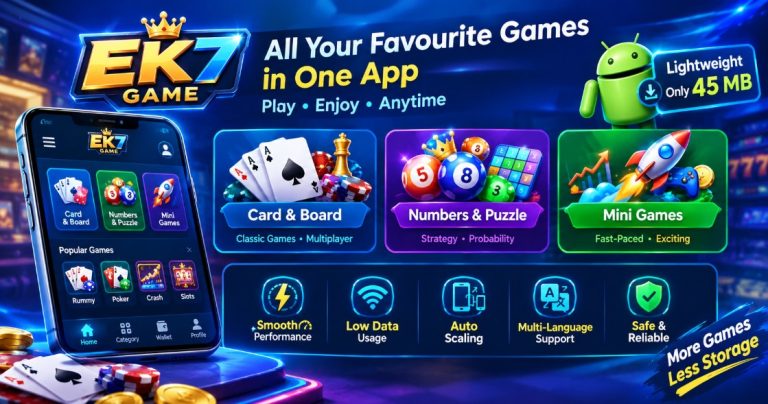
Consolidating online game categories inside a unified framework demands advanced data packet management. Background processes must transfer critical information quickly without placing heavy stress on cellular bandwidth configurations.
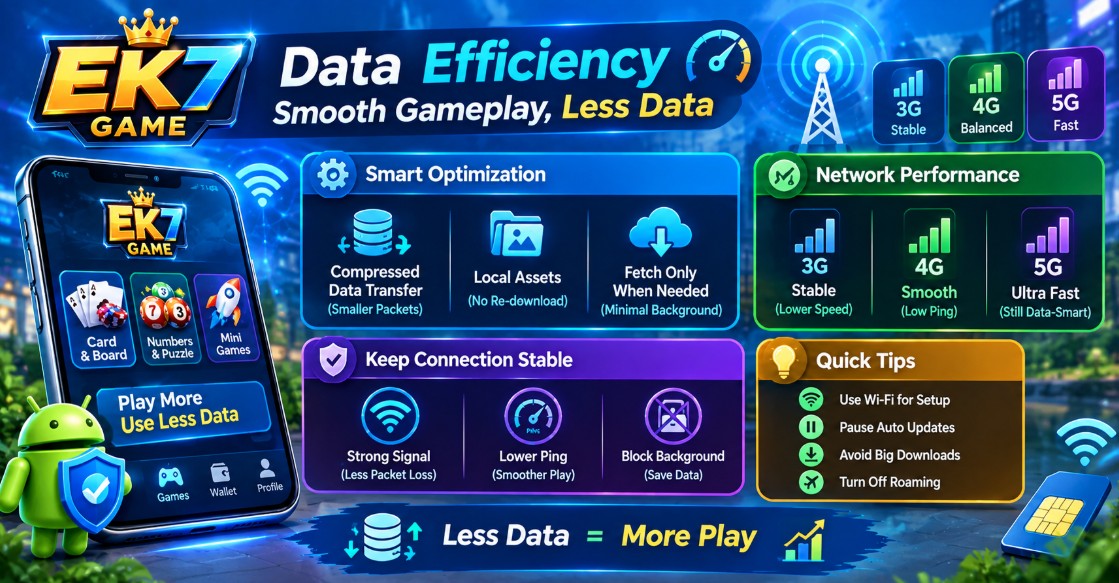
- Compressed Network Architecture: EK7 Game utilizes optimized data synchronization protocols that shrink communication packet sizes during client-server exchanges.
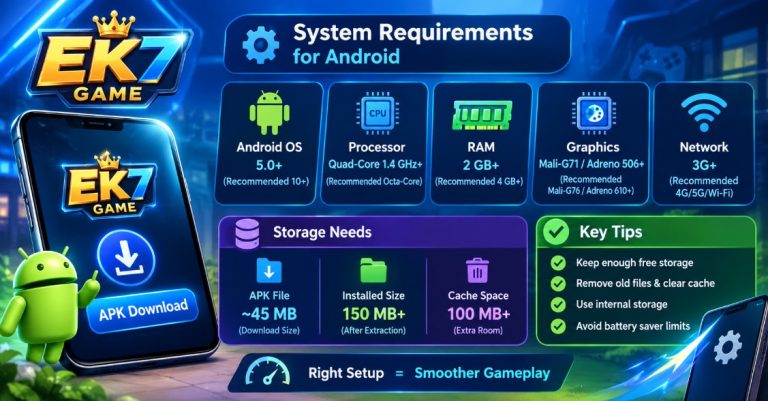
- Static Asset Management: Core user interface textures, fonts, and icon sheets reside locally within the 45 MB installation file, eliminating the need to redownload graphic components constantly.
- Progressive Data Fetching: Server communication channels activate only when updating active match parameters or updating global leaderboard scores, keeping background network activity minimal.
Performance Analysis Across Mobile Networks
Cellular connection standards vary widely across different regions, meaning mobile software must adapt dynamically to fluctuating network speeds to preserve operational stability.
3G Legacy Network Stability
Older mobile cellular architectures deliver lower data throughput speeds and higher overall transmission delays. EK7 Game addresses these hardware constraints by trimming non-essential background metrics down to bare functional levels. Game servers maintain consistent synchronization loops even when throughput drops to legacy 3G baselines, enabling baseline connectivity where heavier applications freeze completely.
4G LTE Mid-Tier Connectivity
Fourth-generation networks offer a balanced framework for online interactions, featuring low ping times and steady data transfer channels. Network engines inside the application package capitalize on this stability to accelerate multiplayer matching routines and streamline initial dashboard transitions. Bandwidth consumption under 4G configurations remains controlled, preventing unexpected data cap depletion during long commutes.
5G High-Velocity Synchronization
Current network standards provide massive bandwidth limits and near-instant server response times. While 5G connections allow rapid data streaming, the platform maintains its low-consumption rules to avoid wasting data. High refresh-rate displays sync fluidly with incoming data packets, resulting in responsive visual tracking without multiplying background network costs.
Reducing Ping Variations and Interruption Latency
High latency readings or erratic ping spikes disrupt online game sessions far more than low connection throughput speeds. Managing network signal consistency prevents system synchronization freezes during active sessions.
| Connectivity Type | Average Ping Trend | Data Usage Profile | Stability Rating |
|---|---|---|---|
| Wi-Fi Hotspots | Lowest Latency | Unlimited Allocation | Highly Consistent |
| 4G LTE Cellular | Moderate / Steady | Optimized / Low | Balanced Performance |
| 3G Cellular Legacy | Higher Latency | Minimum Baseline | Functional Restraints |
Eliminating Packet Loss Cycles
Packet loss happens when small bundles of technical information fail to reach remote cloud destinations due to weak cellular signals or tower congestion. Missing data packets force mobile apps to request retransmissions continually, which causes layout freezes and inflates monthly billing metrics. Running sessions in areas with strong cellular reception or shifting to localized Wi-Fi prevents these repetitive data transmission loops.
Background Traffic Suppression
Android devices frequently execute automated updates and sync social media accounts behind open application windows. These concurrent background connections fight for limited network bandwidth, leading to sudden artificial ping spikes mid-session. Restricting background data permissions for heavy non-gaming utilities via Android configuration panels secures the entire network path for your active session.
Manual Recommendations to Maximize Data Savings
Taking control of smartphone storage preferences and tweaking device connection priorities yields noticeable data savings during cellular network operation.
- Block Automated App Updates: Access mainstream store configuration dashboards to pause background software updates during active network sessions.
- Mute Concurrent Media Downloads: Avoid downloading high-definition video files or large system updates while running online casual game applications.
- Utilize Secured Wi-Fi: Transfer the initial 45 MB setup archive from ek7apk.app over unmetered local networks to save cellular data allowances for actual playtime.
- Deactivate Data Roaming: Monitor network boundaries carefully when travelling to prevent cellular providers from applying expensive international data roaming fees.
Summary of Optimization Value
EK7 Game APK combines smart programming techniques with low-bandwidth processing to prove that diverse mobile entertainment does not require heavy data plans. Using local graphic compression, static asset preservation, and responsive synchronization limits keeps data usage low on entry-level networks. This efficient network design allows Android users to enjoy fluid gameplay sessions, maintain low ping scores, and preserve monthly data allotments comfortably on any standard mobile configuration.